Tues - Friday 10 - 5:30, Thurs 10 - 4, Sat 11 - 4
Vintage Wedding Bands: A Guide to Antique and Vintage Wedding Rings by Era
A wedding band is the piece of jewelry most people wear every single day, which is a big part of why vintage wedding bands have such appeal. An antique band has already proven it can stand up to decades of wear, and its engraving, metal, and shape tell you exactly when it was made. Lippa’s collection of vintage wedding bands spans more than a century of these designs.
What Makes a Wedding Band Vintage or Antique?
The terms are used loosely, but there’s a general rule. Antique wedding rings are at least 100 years old, which today covers Victorian, Edwardian, and early Art Deco bands. Vintage wedding rings are usually at least 20 years old and clearly reflect the style of their era, such as Retro bands of the 1940s or Mid-Century designs of the 1950s and 1960s. Both fall under the larger umbrella of estate jewelry, which simply means previously owned.
What sets either apart from a new band is how it was made. Many older bands were finished by hand, engraved freehand, and set with hand-cut diamonds, and they carry the small signs of a long life that no reproduction can copy.
How Wedding Bands Changed Through the Eras
Victorian wedding bands were typically wide, plain bands of high-karat yellow gold. In Britain, 22 karat gold was common for wedding rings, and many Victorian brides also wore a decorative keeper ring above the band to hold it in place. Edwardian wedding rings moved to platinum, whose strength allowed slimmer bands edged in fine milgrain and set with small diamonds.
Art Deco wedding rings brought geometry and decoration. Engraved bands with orange blossom motifs became a favorite bridal pattern, alongside platinum eternity bands set with diamonds or channel-set sapphires. During World War II, platinum was reserved for the war effort, so Retro bands of the 1940s turned to yellow and rose gold, often with wider, sculptural shapes. The double-ring ceremony, with a band for each partner, also became much more common around this time. Mid-Century bands of the 1950s and 1960s returned to white metals, with clean lines, matching bridal sets, and channel-set diamonds.

Plain, Engraved, or Diamond: Choosing a Style
Vintage bands generally fall into three families. Plain bands are the most durable and the easiest to wear every day, and their profile (flat, rounded, or knife-edged) changes the look more than you might expect. Engraved bands add detail without adding stones, and patterns such as orange blossoms, scrolls, and geometric motifs are strongly tied to their era.
Diamond bands offer the most sparkle. Eternity bands with stones all the way around are beautiful, but they’re difficult to resize, so the size needs to be right from the start. Half eternity bands, with stones across the top only, are easier to adjust and often more comfortable. For any diamond band, check that every stone is secure and that the settings haven’t worn thin.

Matching Metal, Width, and Fit
When a wedding band will be worn next to an engagement ring, a few details help the two get along. Matching metals usually look best and wear more evenly, since pairing metals of different hardness can cause the softer one to wear more quickly over time. Width and profile matter too: a slim band suits a delicate engagement ring, while a wider band balances a substantial one. Some engagement rings sit low or have side details, so the band may need a curve or notch to sit flush.
Karat matters for wear. High-karat gold, such as the 22 karat used in many Victorian bands, has a rich color but is softer than 14 or 18 karat gold, so it will show wear sooner. Lippa’s guide to understanding karat gold explains the differences, and its article on choosing between gold, platinum, and silver covers how each metal wears.
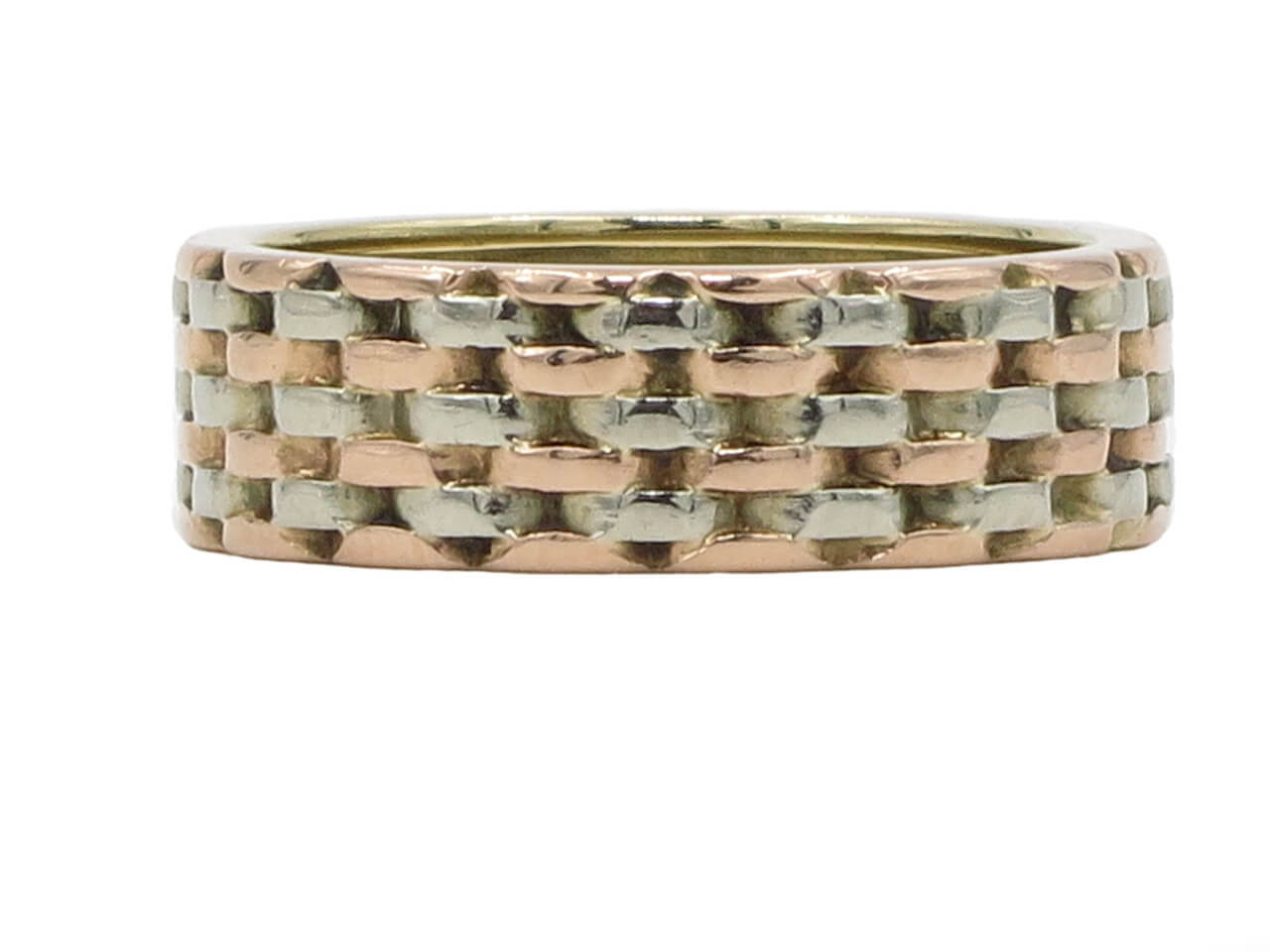
What to Check Before Buying an Antique Wedding Band
A few details are worth confirming with any older band:
- Thickness: Bands thin at the bottom over decades of wear. A very thin band may need reinforcing before it’s ready for daily life.
- Sizing: Plain and engraved bands can usually be resized a little, though engraving can be interrupted where the band is cut. Eternity bands often can’t be resized at all.
- Inscriptions: Many antique bands carry initials or a wedding date inside. These are part of the ring’s history, and many couples add their own engraving alongside rather than removing it.
- Hallmarks: Metal stamps and maker’s marks inside the band help confirm the metal and can help date the ring.
Find Your Vintage Wedding Band at Lippa’s
An antique wedding band connects your marriage to the many that came before it, and choosing a vintage band is also a sustainable choice, since it requires no new mining or manufacturing. Each one is one of a kind, and once it’s gone, it’s gone.
Browse Lippa’s full collection of vintage wedding bands, explore era-specific selections such as Victorian wedding bands and Art Deco wedding rings, or find a match in men’s estate jewelry and vintage engagement rings.