Tues - Friday 10 - 5:30, Thurs 10 - 4, Sat 11 - 4
Old Mine Cut vs. Old European Cut Diamonds: A Guide to Antique Diamond Cuts
Before modern machinery made perfectly uniform diamonds possible, every stone was shaped largely by hand and by eye. The results, including the old mine cut diamond, the Old European cut diamond, and the rose cut diamond, have a softer, warmer kind of sparkle that many buyers now prefer to the crisp brilliance of a modern round. Lippa’s collection of vintage diamond rings is full of examples of these historic cuts.
Why Antique Diamond Cuts Look Different
Antique cutters weren’t working toward mathematical precision. Their goal was to preserve as much of the rough crystal as possible while bringing out its fire, and the finished stones were designed to glow in candlelight and gaslight, the lighting of their time. The result is a diamond that shows broad, colorful flashes of light rather than the fine, rapid sparkle of a modern brilliant.
Modern round brilliants follow proportions calculated in the early 20th century and refined with today’s technology, which produces an extremely consistent look. Antique diamond cuts, by contrast, vary noticeably between stones. No two are exactly alike, and that individuality is a large part of their appeal to buyers looking for a diamond with history behind it.
What Is an Old Mine Cut Diamond?
The old mine cut was the defining diamond cut of the 18th and much of the 19th century. It has a cushion-shaped outline, somewhere between a square and a circle, along with a high crown, a small table, and a deep pavilion. Most old mine cuts also have a large, open culet, the tiny flat facet at the bottom of the stone, which can appear as a small circle when viewed through the top.
The name refers to the “old mines” of India and Brazil that supplied most of the world’s diamonds before the major South African discoveries of the late 1800s. Because each stone was cut to follow the shape of its rough crystal, old mine cuts are often slightly asymmetrical, and that handmade quality is part of their charm. They appear frequently in Victorian jewelry and in many Victorian engagement rings.
Old mine cuts are also becoming harder to find. Over the past century, many were recut into modern brilliants, losing both weight and character in the process, so well-preserved examples are increasingly sought after by collectors.

What Is an Old European Cut Diamond?
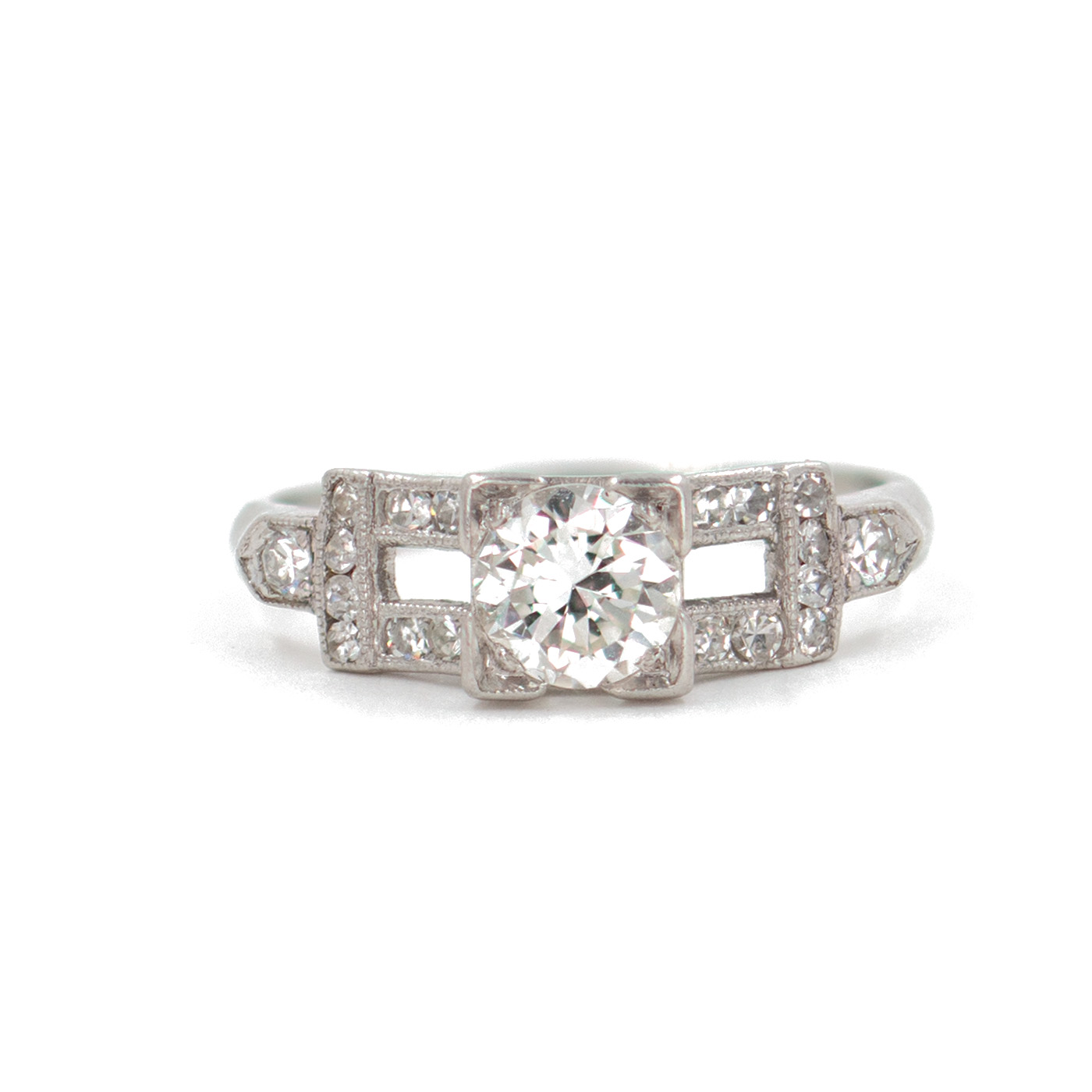
The Old European cut emerged in the late 19th century, as improved tools, including early mechanical bruting machines, made it possible to shape a truly round outline. It kept the old mine cut’s small table, high crown, and open culet, but its circular shape and more even facet arrangement produced greater brilliance.
Old European cuts remained the standard well into the 1930s, which is why they appear in so many Edwardian and Art Deco pieces. The cut is the direct ancestor of today’s round brilliant, yet it still offers that distinctive antique glow, with broad, dancing flashes of light that many people describe as having more depth than a modern stone.
Old Mine Cut vs. Old European Cut: How to Tell Them Apart
The two cuts share a common lineage, but a few features set them apart:
- Shape: Old mine cuts have a cushion or squarish outline, while Old European cuts are round.
- Era: Old mine cuts dominated through most of the 19th century, while Old European cuts took over in its final decades and stayed popular into the 1930s.
- Symmetry: Old mine cuts tend to be less symmetrical, reflecting their hand-shaped outlines, while Old European cuts are more uniform.
- Light performance: Both show broad flashes of light, but Old European cuts generally appear a bit brighter thanks to their rounder, more balanced facet pattern.
A third style, the transitional cut diamond, appeared mainly in the mid-20th century and bridges the gap between the Old European cut and the modern brilliant. It has a larger table and smaller culet than an Old European cut, but it keeps more vintage character than a contemporary round.
The Rose Cut: An Even Older Tradition
Long before the old mine cut, jewelers were producing the rose cut, a style that dates to the 1500s. Rose cut diamonds have a flat base and a domed top covered in triangular facets that rise to a point, resembling the petals of an opening rosebud. Rather than sparkling, they give off a soft, glassy glow.
Rose cuts appear often in Georgian and early Victorian jewelry, frequently set with closed backs in silver-topped gold. They’ve seen a strong revival in recent years among buyers who want a subtle, low-profile diamond with an unmistakably antique look.
What to Look for When Buying an Antique Cut Diamond
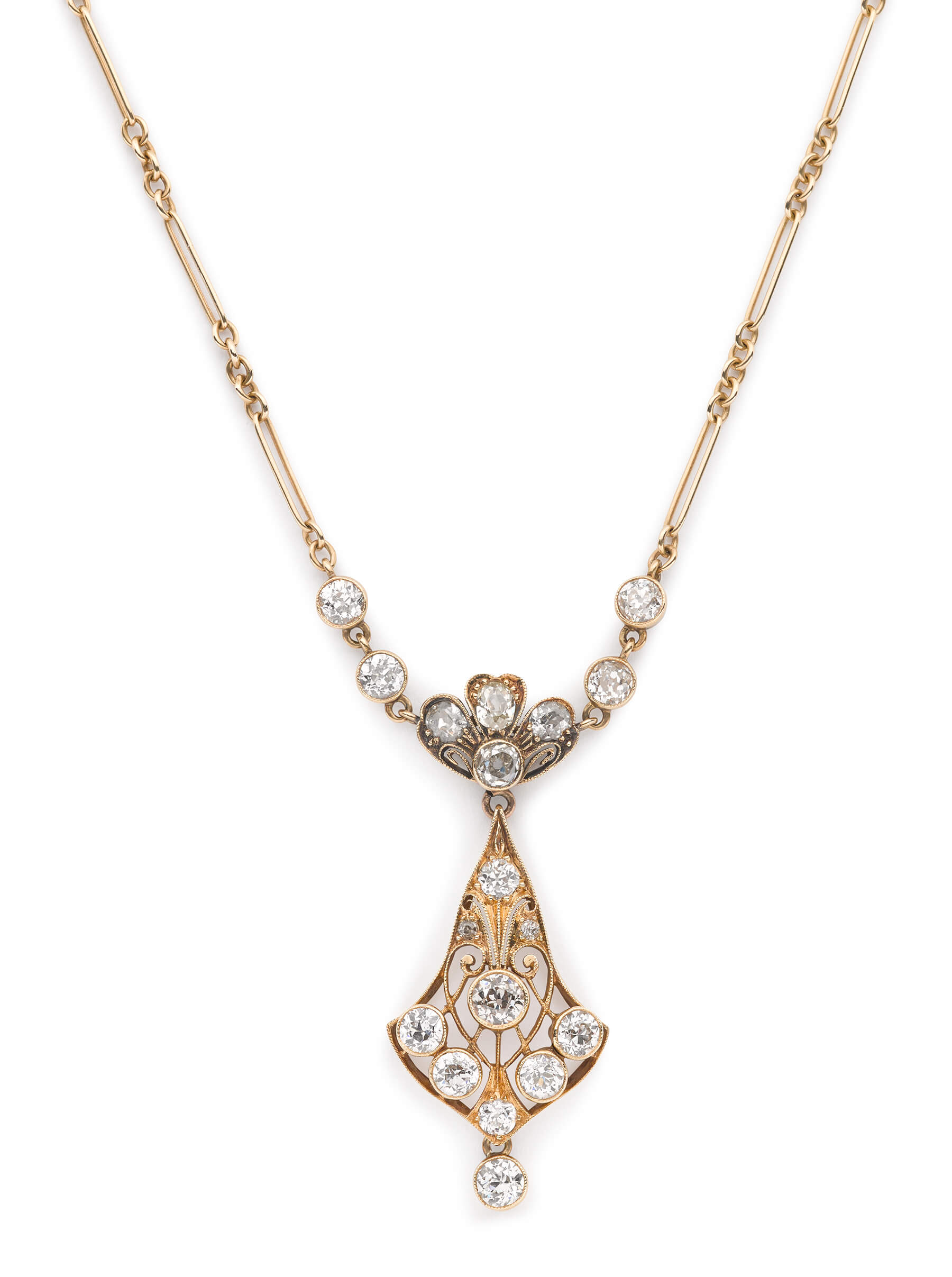
Evaluating antique diamonds calls for a slightly different mindset than shopping for a modern stone. The standard cut grades used for modern round brilliants weren’t designed for these diamonds, so judging an antique cut relies more on how the stone performs to the eye, how well its proportions balance, and whether it has picked up chips or abrasion over the years. Many antique diamonds also show slightly warmer color, which tends to complement the yellow gold and platinum settings of their era.
Antique cuts aren’t limited to finished jewelry, either. Lippa’s selection of loose diamonds and gemstones is a good place to find a stone for a custom piece, while vintage engagement rings offer antique cuts already paired with period settings. Choosing an antique diamond also brings a sustainability benefit, since it requires no new mining.
Discover Antique Diamond Cuts at Lippa’s
Old mine, Old European, and rose cut diamonds each represent a different chapter in the history of diamond cutting, and all three offer a warmth and individuality that modern stones rarely match. Because so many have been recut or lost over time, every surviving example is a small piece of history.
Browse Lippa’s collections of antique diamond jewelry, vintage diamond rings, and Victorian engagement rings to see these historic cuts up close.