Tues - Friday 10 - 5:30, Thurs 10 - 4, Sat 11 - 4
Victorian Engagement Rings: Symbolism, Stones, and Styles of the 1800s
Every antique ring carries a story, but few tell it as openly as a Victorian one. Serpents for eternal love, hidden messages spelled out in gemstones, and two stones set side by side for a pair of hearts: Victorian engagement rings were designed to say something. Lippa’s collection of Victorian engagement rings brings that sentiment together with craftsmanship that has already lasted well over a century.
A Ring for Every Chapter of the Victorian Era
Queen Victoria reigned between 1837 and 1901, and jewelry changed a great deal over those six decades. Rings from the early Romantic period favor hand-engraved yellow gold, nature motifs, and colored stones chosen for their meaning. After Prince Albert’s death in 1861, the Grand period brought heavier, more formal designs, and the late Victorian or Aesthetic period lightened things again with delicate diamond clusters and slender bands.
The late 1800s also changed what went into these rings. Major diamond discoveries in South Africa, beginning in 1867, made diamonds far more available, so diamond engagement rings became much more common in the second half of Victoria’s reign. In 1886, Tiffany & Co. introduced its six-prong solitaire setting, raising the diamond above the band to catch more light, and that silhouette still shapes engagement rings today.
The Symbolism Behind Victorian Rings
Victorian couples loved jewelry with hidden meaning, and engagement rings were the perfect place for it. The serpent is the best-known example. When Victoria and Prince Albert became engaged in 1839, Albert gave her a gold serpent ring set with an emerald, her birthstone, and the coiled serpent became a popular symbol of eternal love. A Victorian snake ring remains one of the most recognizable antique styles today.
Acrostic rings took the idea further by spelling a word with the first letter of each gemstone. A ring set with ruby, emerald, garnet, amethyst, ruby, and diamond spells REGARD, and DEAREST rings followed the same pattern. Toi et moi rings, French for “you and me,” set two stones side by side to represent the couple. The design dates to the late 1700s, remained popular throughout the Victorian era, and has enjoyed a major revival with modern buyers.

Diamonds, Gemstones, and Metals of the Period
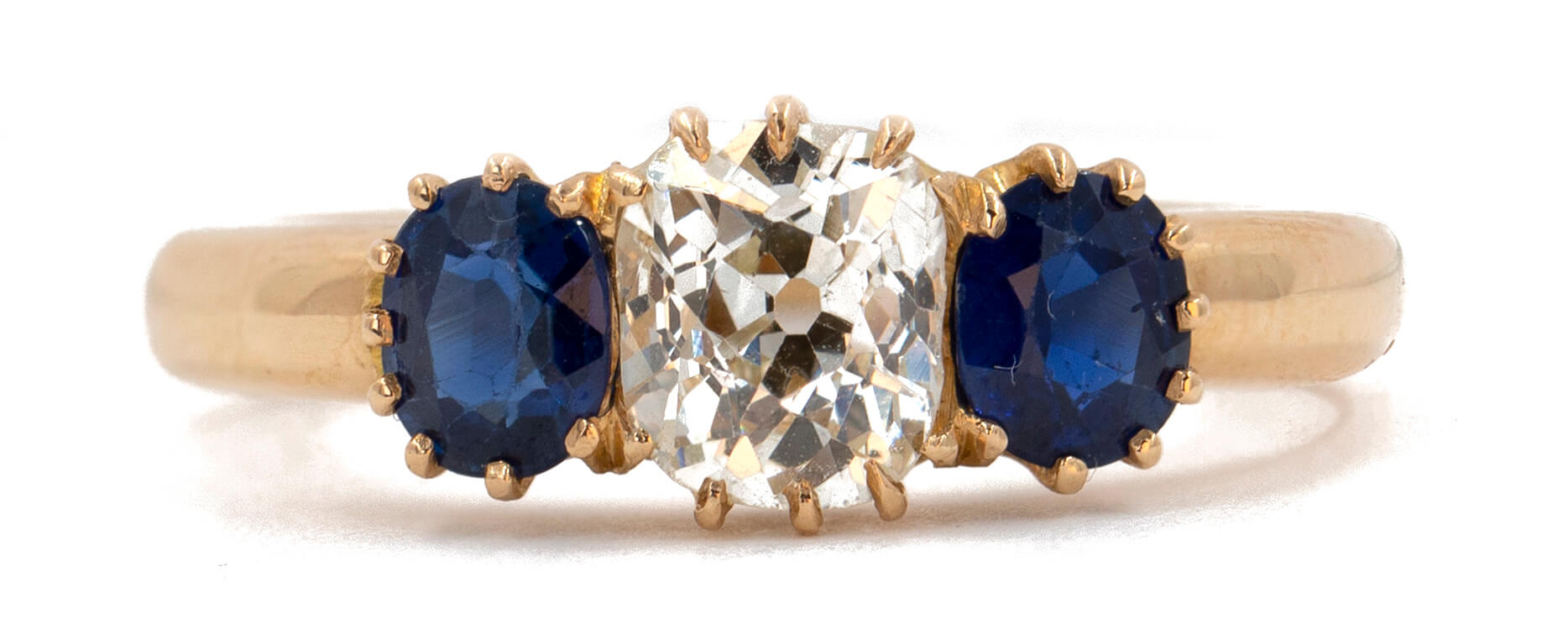
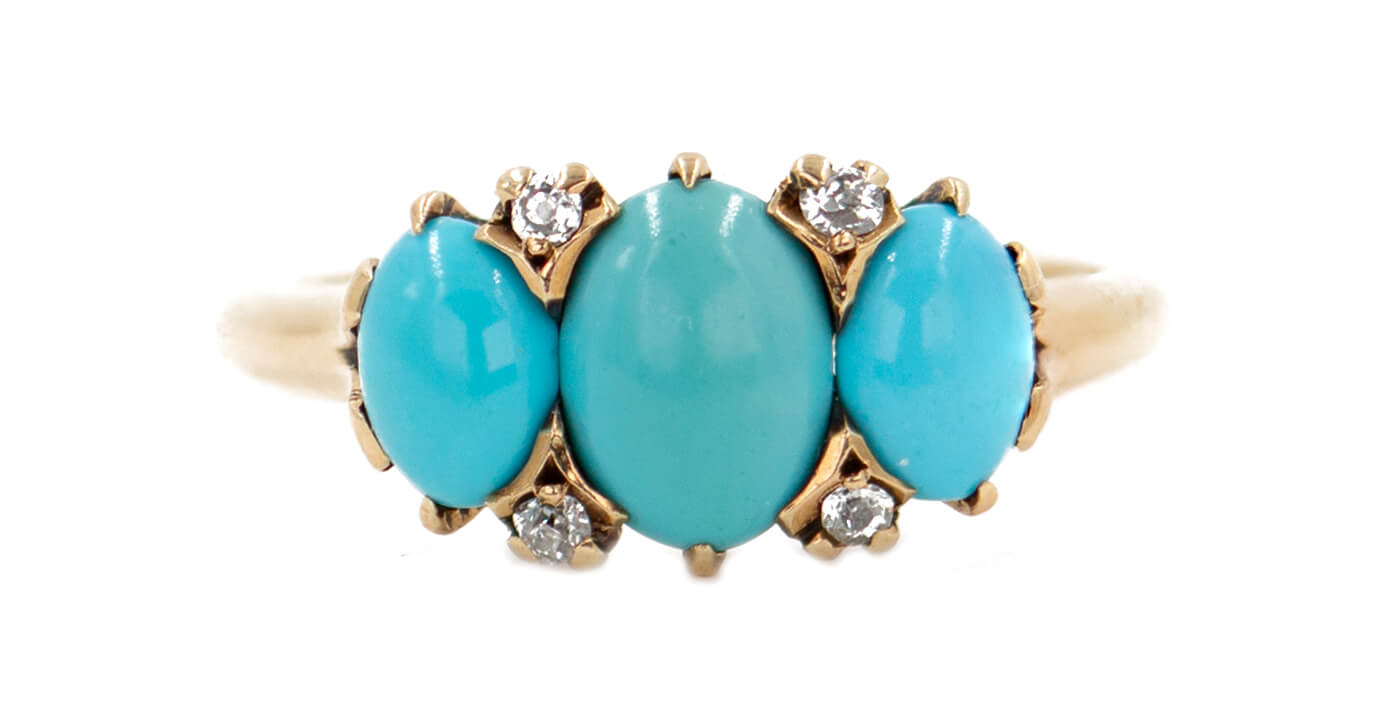
Victorian diamonds were cut by hand, and two cuts dominate the period. The old mine cut, with its cushion shape, high crown, and open culet, produces broad, warm flashes of light, while the flat-backed rose cut gives a softer, candlelit glow. Many buyers looking for an old mine cut engagement ring find exactly what they want in Victorian pieces. Colored stones played a big role too, including garnet, turquoise, sapphire, ruby, and seed pearls, often combined with diamonds in clusters and borders.
Most Victorian rings were made in high-karat yellow gold or warm rose gold. Earlier pieces sometimes use silver-topped gold, with silver set against the diamonds to make them look whiter and gold underneath for strength. Platinum didn’t become common in fine jewelry until the very end of the century, which is one way to tell a Victorian ring from an Edwardian one.
Popular Styles of Victorian Engagement Rings
Beyond serpents and toi et moi designs, a few silhouettes appear again and again:
- Cluster rings: A center stone ringed by smaller diamonds or pearls, sometimes called a daisy or flower cluster.
- Half-hoop rings: A row of matched stones set across the top of the band, usually diamonds or alternating colored stones.
- Gypsy rings: Stones set flush into a heavy gold band, often with engraved star-shaped settings around each one. These wear especially well because nothing sticks up to snag.
- Solitaires: A single diamond, often an old mine cut, in a raised claw or collet setting, more common in the late Victorian years.
What to Check Before Buying a Victorian Ring
A ring that’s 125 years old or more will show some wear, and that’s part of its character. Still, a few details deserve a close look. Check the back of the shank, which often thins over decades of wear and may need reinforcing, and look at each prong or collet to make sure the stones are secure. Ask whether the ring has been resized, since high-karat gold shanks can be delicate.
Some Victorian rings use closed-back settings, sometimes with a foil behind the stone to boost its color. These shouldn’t be soaked in water, since moisture can damage the foil. British rings often carry hallmarks that help with dating, and a 15ct gold mark is a useful clue, since that standard was only used in Britain between 1854 and 1932. Lippa’s article on why antique engagement rings are the most sustainable choice is also worth a read for buyers weighing a Victorian ring against a new one.
Find Your Victorian Engagement Ring at Lippa’s
A Victorian engagement ring offers more than antique style. It carries the symbolism, hand craftsmanship, and history of an era that treated jewelry as a language, and each surviving ring is entirely one of a kind.
Browse Lippa’s Victorian engagement rings, explore the wider Victorian jewelry collection, or compare designs across eras in the full selection of vintage engagement rings. For more on the period, Lippa’s guide to Victorian necklaces, brooches, and bracelets covers the era’s other signature pieces.