Tues - Friday 10 - 5:30, Thurs 10 - 4, Sat 11 - 4
Vintage & Antique Enamel Jewelry
Step into a world of color and craftsmanship with vintage enamel jewelry. Celebrated for its vivid hues and intricate detailing, enamel adds a touch of artistry to every piece.
Showing all 4 results
-

14 Karat Yellow Gold Victorian Moonstone, Diamond and Blue Enamel Cocktail Ring
$1,995.00 -

18 Karat Yellow Gold Red Enamel and Diamond Criss Cross Band
$2,500.00 -
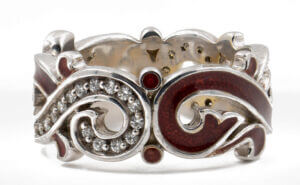
18 Karat White Gold Open Scroll Design with Burgundy Enamel and Diamond Ring
$1,750.00 -

Victorian 14 Karat Gold and Black Enamel Mens Wedding Band
$895.00
Enamel has been used in fine jewelry for centuries as a way to add color, contrast, and storytelling to precious metal designs. Through a process of fusing powdered glass onto gold, silver, or other metals, enamel creates a vibrant, glass-like surface that brings intricate patterns, floral motifs, symbolic elements, and abstract shapes to life. From the romantic curves of Art Nouveau to the structured forms of Art Deco, enamel jewelry reflects the artistry and spirit of its era.
Lippa’s curated collection of vintage and antique enamel jewelry includes everything from delicately hand-painted lockets and brooches to striking rings and charm bracelets. Whether you’re drawn to soft pastel enamels of the Edwardian period or the bold black and white contrasts of the 1920s, each piece is a one-of-a-kind work of wearable art. As with all estate jewelry at Lippa’s, each enamel piece is not only beautiful but truly irreplaceable. Explore the enduring charm and craftsmanship of enamel jewelry in our collection today.
Enamel Jewelry FAQs
Enamel jewelry is created by fusing powdered glass onto metal using high heat, forming a glossy and colorful surface. It has been used for centuries in Victorian and Art Nouveau jewelry for its ability to add vibrant color and intricate detail. Each enameled piece is a miniature work of art, often requiring multiple firings to achieve its depth and shine.
No — techniques vary widely. Cloisonné, guilloché, champlevé, and plique-à-jour are all forms of enameling, each creating unique visual effects. In estate jewelry, you’ll find guilloché and plique-a jour enamel paired with platinum or gold for a luxurious sheen, especially in Edwardian and Belle Époque pieces.
Avoid moisture, chemicals, and sudden temperature changes, as these can cause cracking or discoloration. Clean gently with a soft cloth and mild water if needed — never ultrasonic or abrasive cleaning. Store enamel pieces separately from harder gemstones to prevent chipping.
Because true hand-fired enamel work is labor-intensive and rarely replicated today. Each piece reflects an artisan’s skill and historical design aesthetic. Vintage enamel jewelry remains prized for its durability, color brilliance, and undeniable charm.