Tues - Friday 10 - 5:30, Thurs 10 - 4, Sat 11 - 4

Vintage Wedding Ring Sets: How to Pair a Band with a Vintage Engagement Ring
Finding the right engagement ring is only half the story. The wedding band will sit beside it every day for decades, so the two need to fit together physically and look right side by side. That’s especially true with vintage rings, whose settings were often designed with very different proportions than modern ones. Lippa’s selection of vintage wedding bands makes it easier to find a partner for almost any engagement ring, and vintage wedding ring sets offer a ready-made match.
Original Bridal Sets vs. Assembled Pairs
Some engagement rings and bands were designed and sold together as vintage bridal sets. Matched sets were especially popular in the 1940s and 1950s, when many were made to interlock, with the band shaped to fit snugly against the engagement ring’s setting. Art Deco jewelers also made fitted sets, though fewer have survived intact. An original set that has stayed together for 70 years or more is uncommon, and that history is part of its appeal.
Most couples today assemble a pair instead, choosing a band that complements their engagement ring rather than one made with it. This gives far more freedom, since you’re not limited to whatever band originally came with the ring. A well-chosen pair can look every bit as cohesive as an original set, and sometimes more interesting.
Why Some Vintage Engagement Rings Need a Special Band
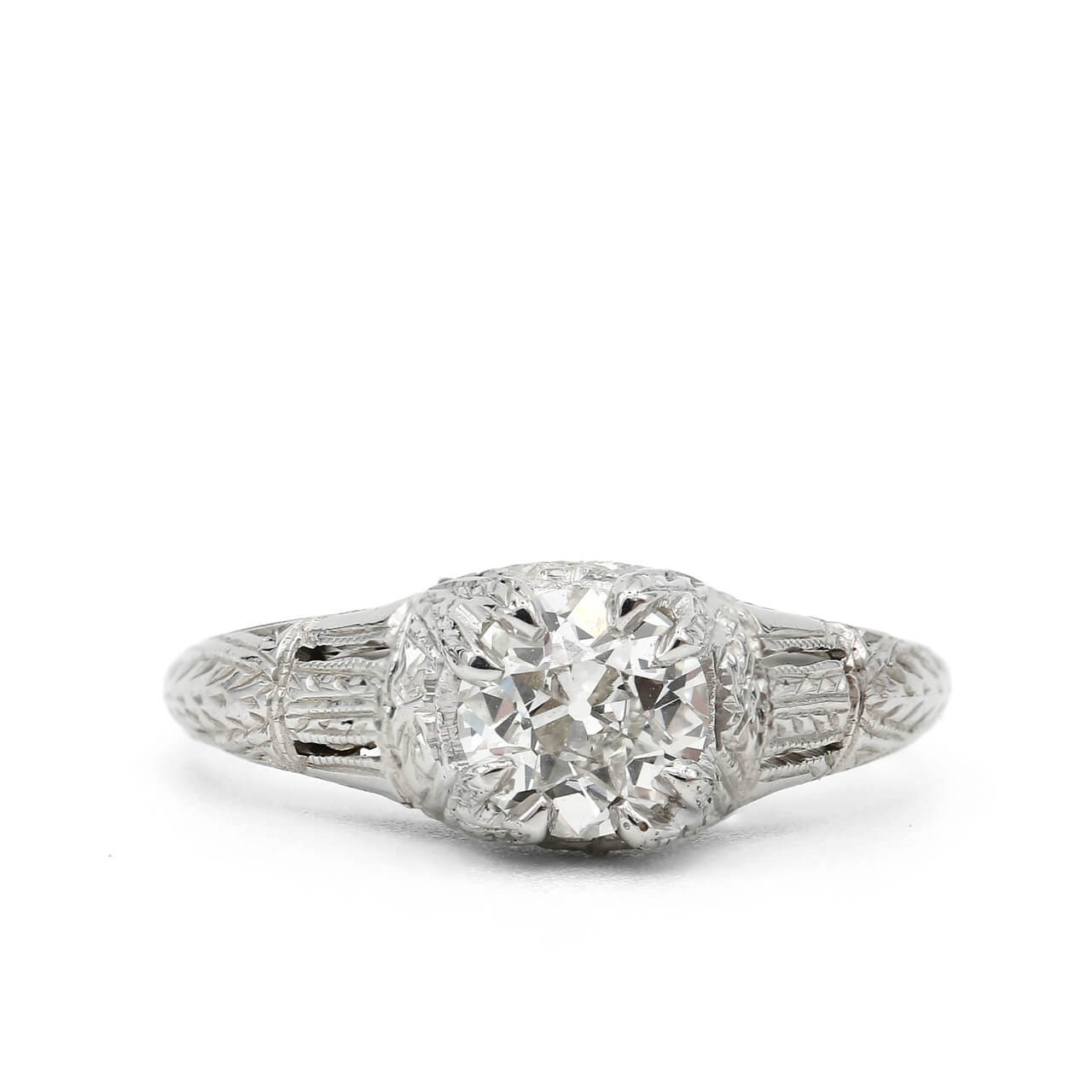
Many vintage engagement rings don’t sit flush against a straight band. Low-set heads, wide halos, cathedral shoulders that sweep up to the center stone, and settings that flare out at the base can all leave a gap or keep a straight band from lying beside the ring.
Contoured, curved, or notched bands solve this by following the shape of the engagement ring. Some couples are happy with a small gap, which can even show off the profile of a detailed setting. Others prefer the two rings to sit tight together. Either is fine, but it helps to decide before shopping, since it narrows the choice of bands considerably.
Matching Metal and Color
Matching metals usually look best and wear most evenly. Pairing metals of different hardness, such as soft high-karat gold next to platinum, can cause the softer ring to wear down faster where the two rub together. Lippa’s article on choosing between gold, platinum, and silver covers how each metal behaves over time.
Color matters too. Platinum has a naturally gray-white tone, while white gold is often plated with rhodium for a brighter white that can wear away and reveal a warmer color underneath. Yellow gold also varies by karat, with 18 and 22 karat gold looking noticeably richer than 14 karat. Lippa’s guide to understanding karat gold explains those differences.
Matching Style, Width, and Era
A few simple principles help a pair look intentional. Match the band’s width to the engagement ring’s shank so neither overwhelms the other. Repeat a detail, such as milgrain beside milgrain or engraving beside engraving, to tie the two together. And if the engagement ring is highly detailed, a simpler band often lets it shine.
Matching eras is a natural choice: a Victorian wedding band with a Victorian ring, an Edwardian wedding ring with an Edwardian setting, or an Art Deco wedding ring with an Art Deco engagement ring. Mixing eras can work beautifully as well, as long as the metal, width, and level of detail feel balanced.
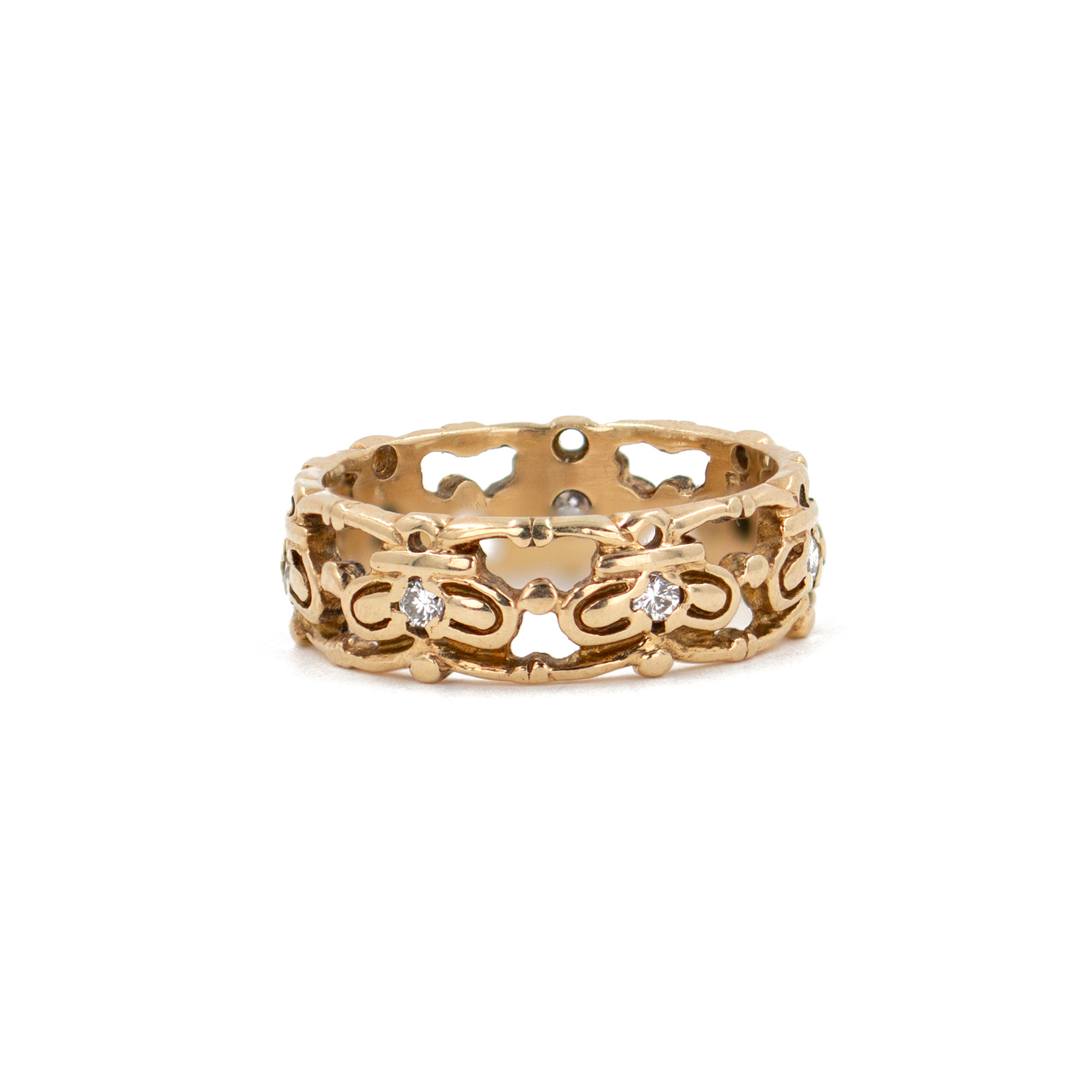
It’s also worth thinking ahead. Many couples add a second band later, often for an anniversary, and place it on the other side of the engagement ring. Choosing a first band with a simple profile leaves room for that, and a vintage eternity band or a slim diamond band from another era can make a meaningful addition years down the road.

Practical Tips for Choosing a Vintage Wedding Set
A few practical steps make the search easier:
- Know the engagement ring’s measurements: Note its size, the width of the shank, and how high the setting sits. A profile photo taken at eye level is very helpful.
- Check whether a set is original: Matching hallmarks, maker’s marks, and similar wear on both rings suggest they were made and worn together.
- Size both rings together: Two rings worn side by side often fit more snugly than one alone, so it’s worth trying the pair together before resizing.
- Consider soldering: Some couples have their rings joined so they stop spinning and rubbing against each other. It’s a good option for daily comfort, though it means the rings can’t be worn separately.
Find Your Vintage Wedding Set at Lippa’s
A thoughtfully chosen pair turns two rings into a single piece of jewelry that tells your story. With so many vintage bands made in different shapes, widths, and metals, there’s almost always a match for even the most unusual engagement ring.
Browse Lippa’s vintage wedding bands and vintage engagement rings, or explore designs from the Mid-Century era, when matched bridal sets were at their most popular.