Tues - Friday 10 - 5:30, Thurs 10 - 4, Sat 11 - 4

Cameo Jewelry: A Collector’s Guide to Vintage and Antique Cameos
Few pieces of jewelry feel as personal as a cameo. A portrait or scene carved by hand into shell or stone, each one is a small work of art, and no two are exactly alike. Cameo jewelry has moved in and out of fashion for more than two thousand years, and today collectors prize antique and vintage cameos for their artistry and their history. Lippa’s collection of cameo jewelry shows how varied these pieces can be.
What Is a Cameo?
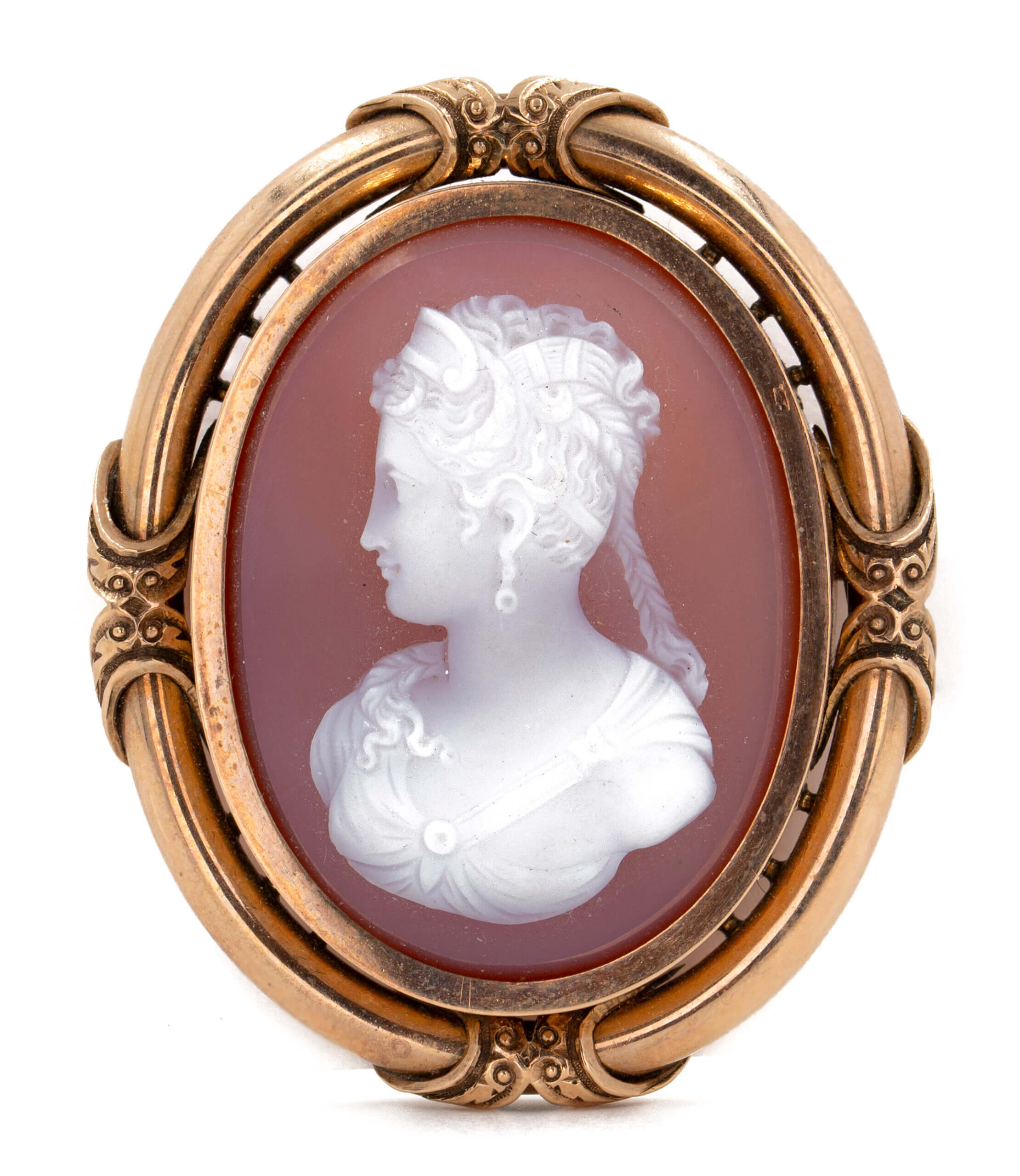
A cameo is a carving in relief, meaning the design is raised above its background. Carvers usually work in materials with natural layers of different colors, cutting away the top layer to leave a light figure standing out against a darker ground. The opposite technique, where the design is cut down into the surface, is called intaglio, and it was traditionally used for signet rings and seals.
The art form dates to ancient Greece and Rome, where cameos carved from layered hardstones were worn by the wealthy and powerful. Interest revived during the Renaissance and again in the early 1800s, when Napoleon’s enthusiasm for cameos helped make them fashionable across Europe. The Victorian era brought the biggest boom of all, as travelers on the Grand Tour of Italy brought cameos home as souvenirs and Queen Victoria herself wore them.
Shell, Stone, Coral, and Lava: Cameo Materials
The material a cameo is carved from affects its look, its value, and how it should be cared for:
- Shell cameos: The most common type. Carvers used the thick walls of large sea shells, which have layers of white over brown, pink, or orange. The area around Torre del Greco, near Naples, has been a center of shell cameo carving since the 1800s.
- Hardstone cameos: Carved from layered stones such as agate, sardonyx, and onyx. Stone is far more difficult to carve than shell, so fine hardstone cameos are generally more valuable.
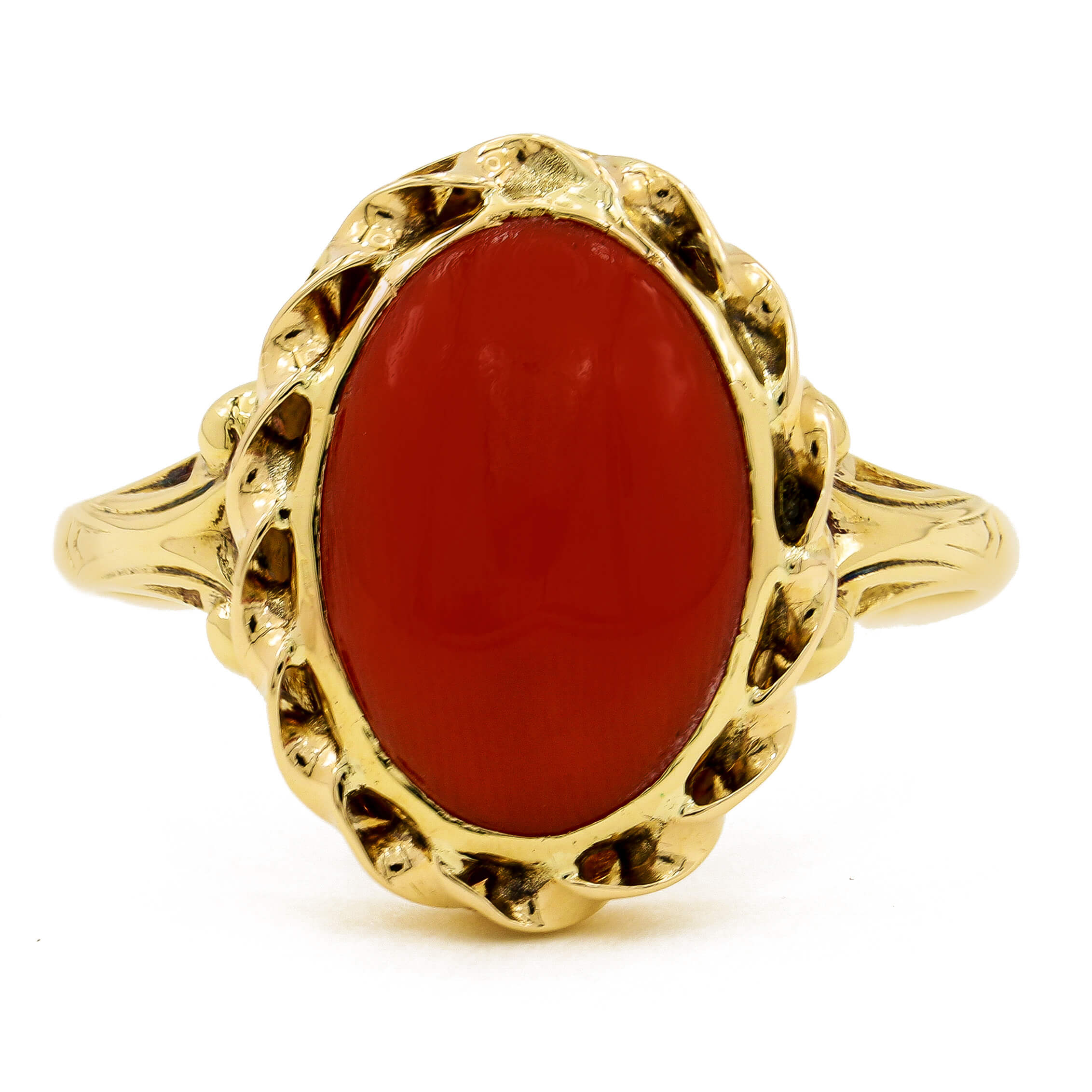
- Coral cameos: Carved from coral, usually in warm pink or orange tones, and popular in Victorian jewelry.
- Lava cameos: Carved from the soft volcanic stone of Mount Vesuvius in muted grays, browns, and creams. These were favorite Grand Tour souvenirs and are now quite collectible.
Cameos also appear in jet, which was popular in Victorian mourning jewelry, and in ceramic, most famously the blue and white jasperware made by Wedgwood. Some especially elaborate pieces, called habillé cameos, dress the carved figure in a tiny necklace or earring set with a real diamond.
How to Date a Cameo
Dating a cameo takes some practice, but a few clues help. Collectors often look at the carved face itself: many 19th-century cameos show classical profiles with straight, Greek-style noses, while 20th-century carvings more often have softer, upturned features and hairstyles of their own time. The quality and depth of the carving also matter, since fine older cameos tend to show more detail and undercutting.
The mounting and fittings give more evidence. On brooches, a long pin that extends past the edge of the frame, a simple C-shaped catch, and a tube hinge are typical of older pieces, while a locking safety catch suggests a later piece or a replacement. Frames made of solid gold, often with seed pearls or fine wirework, are usually more desirable than gold-filled or base metal frames, and many brooches were made with a hidden bail so they could also be worn as a pendant.
How to Tell if a Cameo Is Real
Molded imitations in plastic, resin, and glass have been made for decades, so it’s worth knowing how to tell if a cameo is real. Start by holding a shell cameo up to a light. Carved shell is thin enough to glow through when backlit, while plastic and resin stay opaque. Turn the piece over, too: a shell cameo usually has a gently concave back that follows the curve of the shell.
Look closely at the carving. Hand-carved cameos show crisp edges and tiny tool marks, while molded pieces tend to look soft and rounded, sometimes with a faint seam line or small bubbles. Stone cameos feel cool and heavy in the hand, while plastic feels warm and light. Avoid heat or scratch tests on a piece you care about, since they can cause permanent damage, and ask an experienced jeweler if you’re unsure.
Cameo Brooches, Rings, and Necklaces
The cameo brooch is the classic form, and many are among the finest examples of the carver’s art. Brooches with a pendant bail are especially versatile, since they can be worn on a lapel or hung on a chain as a vintage cameo necklace. Lippa’s brooches and pins and necklaces and pendants collections often include both.
A cameo ring puts a smaller carving on the hand, often in a gold setting with a decorative border, and Victorian and Edwardian cameo rings are popular with collectors who want to wear a cameo every day. Cameo earrings and bracelets with a series of linked carvings were also made, sometimes as part of a matching set, though complete sets are rare today.
Caring for Cameo Jewelry
Shell, coral, and lava are soft materials that can scratch, crack, or dry out, so cameos need gentle handling. Never soak a cameo or put it in an ultrasonic cleaner, and keep it away from perfume, hairspray, and household cleaners. To clean one, wipe it with a soft cloth lightly dampened with water, then dry it right away, taking care around the carved details.
Store cameos flat and separately in a soft pouch or lined box so harder jewelry can’t scratch them, and avoid sudden temperature changes, which can stress shell. Have the pin, catch, and frame checked periodically, since a loose setting is the most common way an antique cameo gets lost.
Find Antique and Vintage Cameos at Lippa’s
A cameo brings together sculpture, history, and sentiment in a single piece, which is why these carvings make such meaningful gifts. Each one was shaped by hand, and once it’s sold, there won’t be another quite like it.
Browse Lippa’s cameo jewelry and Victorian jewelry collections, and see Lippa’s history of brooches in estate jewelry for more on the era’s most beloved pins.