Tues - Friday 10 - 5:30, Thurs 10 - 4, Sat 11 - 4

How to Identify Authentic Art Deco Jewelry: Hallmarks, Construction, and Reproductions
Art Deco is one of the most copied styles in jewelry. Its geometric look has been reproduced for decades, which means a ring or brooch can look perfectly 1920s and still have been made last year. Knowing how to identify Art Deco jewelry comes down to looking past the design and studying the marks, the construction, and the wear. Lippa’s collection of Art Deco jewelry is a useful reference for what authentic period pieces look like up close.
Why Style Alone Isn’t Enough
Geometric shapes, platinum, and diamonds set against onyx or sapphire are the visual signatures of the period, and Lippa’s collector’s guide to Art Deco jewelry covers those hallmarks of style in detail. The trouble is that every one of them can be imitated. Jewelers have produced Art Deco revival pieces since at least the 1970s, and today’s computer-aided design makes it easy to recreate the look with great precision.
That’s why authentication focuses on details a reproduction rarely gets right: how the piece was marked, how it was built, which diamonds and gemstones it uses, and how it has aged. No single clue settles the question, but several together usually tell a clear story.
Reading Metal Stamps and Hallmarks
Metal stamps are a good place to start. American Art Deco platinum is often marked “PLAT” or “PLATINUM,” and many pieces carry “IRIDPLAT” or “10% IRID PLAT,” marking an iridium-platinum alloy that was widely used during the period. Stamps such as “PT950” are more typical of later and modern production, so they deserve a closer look on a piece sold as 1920s. White gold, which became a popular and less expensive alternative to platinum in the 1920s, is usually marked with its karat.
European pieces follow their own systems. French platinum has been marked with a small dog’s head since 1912, and French 18 karat gold carries an eagle’s head. British pieces are a special case: Britain didn’t officially hallmark platinum until 1975, so British Art Deco platinum is often stamped only “PLAT” or carries no platinum mark at all. Maker’s marks, trademarks, and patent stamps can narrow the date further. A missing mark doesn’t rule a piece out, though, since many period pieces were never stamped or have lost their marks to wear and resizing.
Construction Clues: How the Piece Was Made
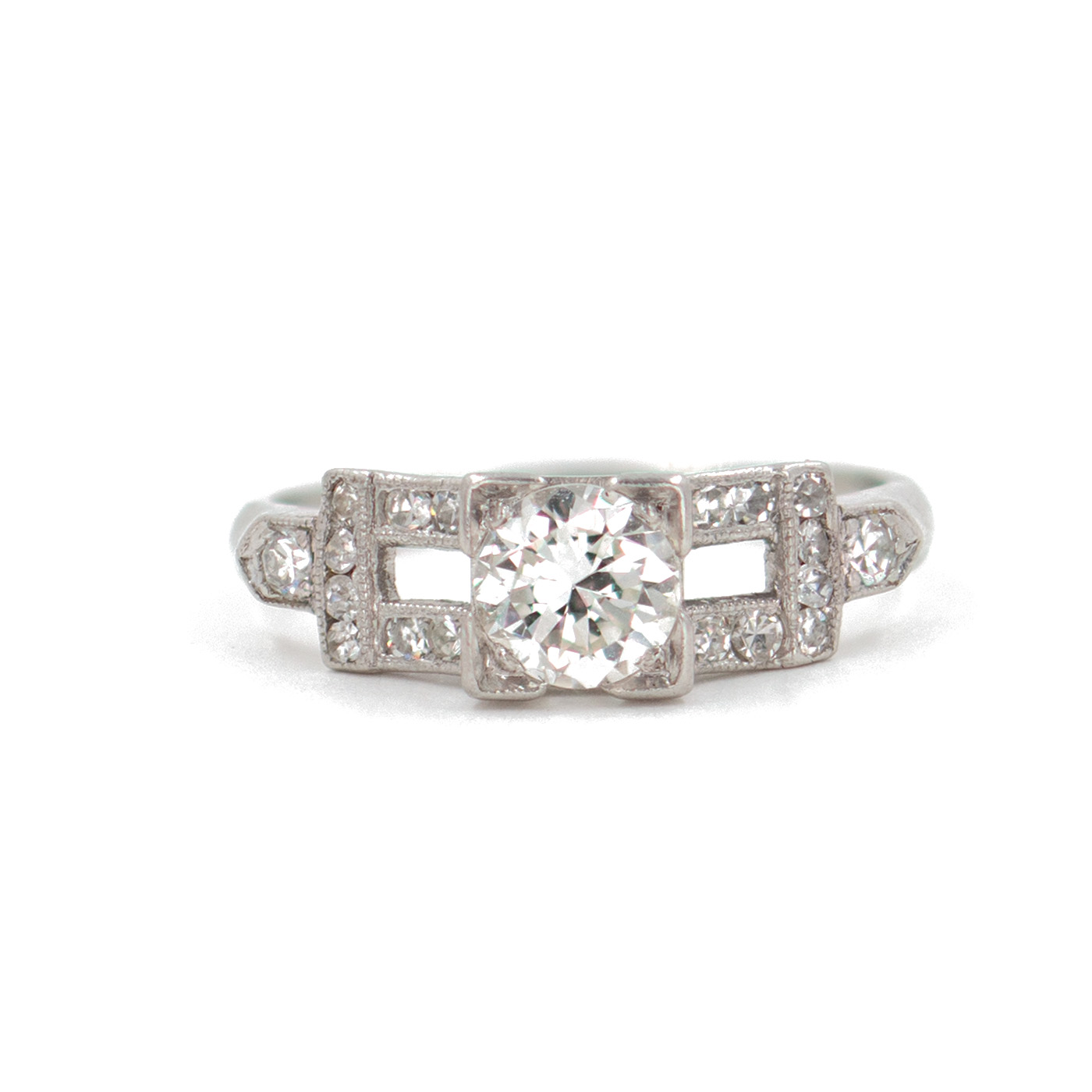
Construction often reveals more than marks do. Early Art Deco openwork was typically pierced and finished by hand, leaving tiny saw marks and slight irregularities inside the openings. By the late 1920s, many American bridal rings used die-struck filigree, which is crisper and more uniform but still has a distinct, sharply defined look. Many modern reproductions, by contrast, are cast, which can leave soft or blurred edges in the detail and tiny pits in the metal surface.
Turn the piece over. Fine Art Deco jewelry was usually finished on the back as carefully as the front, with pierced galleries, engraving, or, hand-shaped prongs. Hand-applied milgrain beading tends to show slight variations in size and spacing that machine-made milgrain doesn’t. Hinges, clasps, and earring backs can help too: simple C-catches and European trombone clasps on brooches and screw-backs on earrings are typical of the period, while modern locking catches and posts may indicate later replacements or a newer piece.
Diamonds and Gemstones as Dating Clues
The stones themselves are some of the most reliable evidence. Most Art Deco center diamonds are Old European cuts, with a small table, high crown, and visible open culet, and accent stones are often single cuts with far fewer facets than modern melee. A piece described as Art Deco but set entirely with modern round brilliants may have been re-set or reproduced. Browsing Lippa’s antique diamond jewelry is a good way to train your eye for these older cuts.
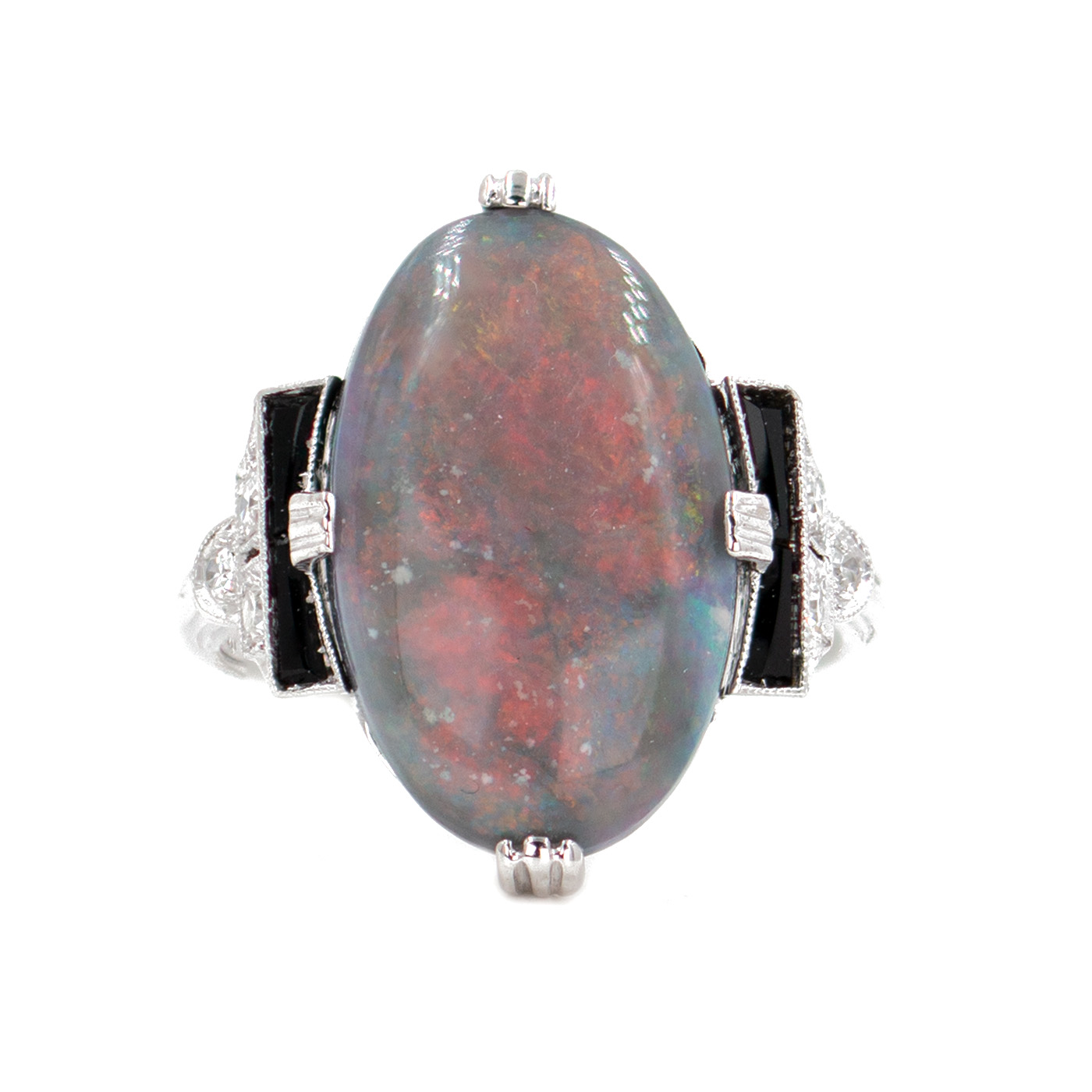
Colored stones were commonly calibré cut, meaning each small stone was cut by hand to fit its exact spot in the setting, so slight differences in size and shape are normal. One surprise for new collectors: a piece can be authentically Art Deco and still contain synthetic rubies or sapphires, since lab-grown corundum was in commercial use by the early 1900s. A gemological report clears up questions like this, and Lippa’s article on what a gemologist does explains how that testing works.
Signs of Age, Alterations, and Reproductions
Real age leaves a particular kind of evidence, and a few patterns are worth watching for:
- Natural wear: Softened edges on the parts that face outward, a thinned ring shank, or slight abrasion on old diamond facets suggest decades of use. Artificial distressing tends to look uniform.
- Alterations: Brooches converted to pendants, earrings converted to posts, and replaced center stones are common. They don’t make a piece fake, but they affect value and should be disclosed.
- Art Deco style reproductions: Pieces made in sterling silver with cubic zirconia, or stamped with modern standards, are often sold as “Art Deco style.” They can be lovely, but they aren’t period pieces.
- Marriages: Parts from different pieces combined into one, such as an older center on a newer mounting. Mismatched metal color or wear patterns are the usual giveaway.
How Authenticity Affects Value
Authenticity is the starting point for value. An original Art Deco piece in its original setting, with period stones and intact details, commands far more than a reproduction or a heavily altered piece, and signed jewelry from a documented maker carries an added premium. That’s why the Art Deco jewelry identification and value questions almost always go together.
For a significant purchase, it’s worth working with an experienced estate jeweler who will state a piece’s era clearly, disclose repairs and replaced stones, and provide gemological documentation. Metal testing and gemological analysis can confirm what the eye suggests, and a reputable seller should be glad to explain how a piece was dated.

Shop Authentic Art Deco Jewelry at Lippa’s
Learning to identify authentic Art Deco jewelry makes collecting more rewarding, since it lets you appreciate the hand craftsmanship and history that set original pieces apart. Every authentic piece is a survivor of a century of wear, and no two are exactly alike.
Explore Lippa’s Art Deco jewelry, Art Deco engagement rings, and platinum jewelry collections to see these details in authentic period pieces.