Tues - Friday 10 - 5:30, Thurs 10 - 4, Sat 11 - 4
Vintage Ruby Rings: What Makes a Great Stone Stand Out
In a world of diamond solitaires, a ruby ring feels almost defiant: warm where diamonds are cool, opinionated where they’re neutral. And when that ruby happens to be a vintage one, you’re not just wearing a beautiful stone. You’re wearing something with a past.
But here’s the thing nobody tells you when you start looking: rubies vary wildly. Two red rings side by side in a case can be worlds apart in quality and value, and the difference isn’t always obvious at a glance. So before you fall for one, it helps to know what actually separates a good ruby from a great one. Browsing Lippa’s ruby collection is a fine place to train your eye; once you know what you’re looking at, the standouts have a way of announcing themselves.
First, a Quick Word on What a Ruby Actually Is
Rubies and sapphires are, gemologically speaking, siblings. Both are corundum, the same mineral, and the only reason a ruby is red instead of blue comes down to a pinch of chromium in the mix. More chromium, more fire. It’s one of the four precious stones, in the company of diamond, sapphire, and emerald, and it happens to be July’s birthstone, which is why so many people go looking for one in the first place.
There’s a practical bonus here, too. Ruby sits at 9 on the Mohs hardness scale, right behind diamond, so it can genuinely take the knocks of daily life. That matters more than it sounds. A ruby ring isn’t a fragile thing you tuck away for anniversaries; it’s a stone you can actually live in.
Color Is Everything (Really, Everything)
If you remember one thing, make it this: with rubies, color is the whole ballgame. Gemologists break it into three parts—hue (the shade of red), tone (how light or dark it runs), and saturation (how pure and vivid it looks). The stones people chase are richly saturated, sitting in that sweet spot of medium-to-dark red without sliding off toward pink or muddying into brown.
The very best color even has a name: pigeon’s blood. It sounds like marketing, but it isn’t; it’s a recognized benchmark for a pure red with a faint blue undertone, and stones that hit it fetch the highest prices in the world. You may never need a pigeon’s-blood ruby, but knowing the top of the scale helps you judge everything below it.
Where It Came From Tells You Something
Origin carries real weight with rubies. Burmese stones, especially those out of Myanmar’s Mogok Valley, have been the gold standard for centuries, and they’re still the yardstick everyone else is measured against. Thailand, Mozambique, Madagascar, and Afghanistan all produce beautiful rubies too, each with its own personality.
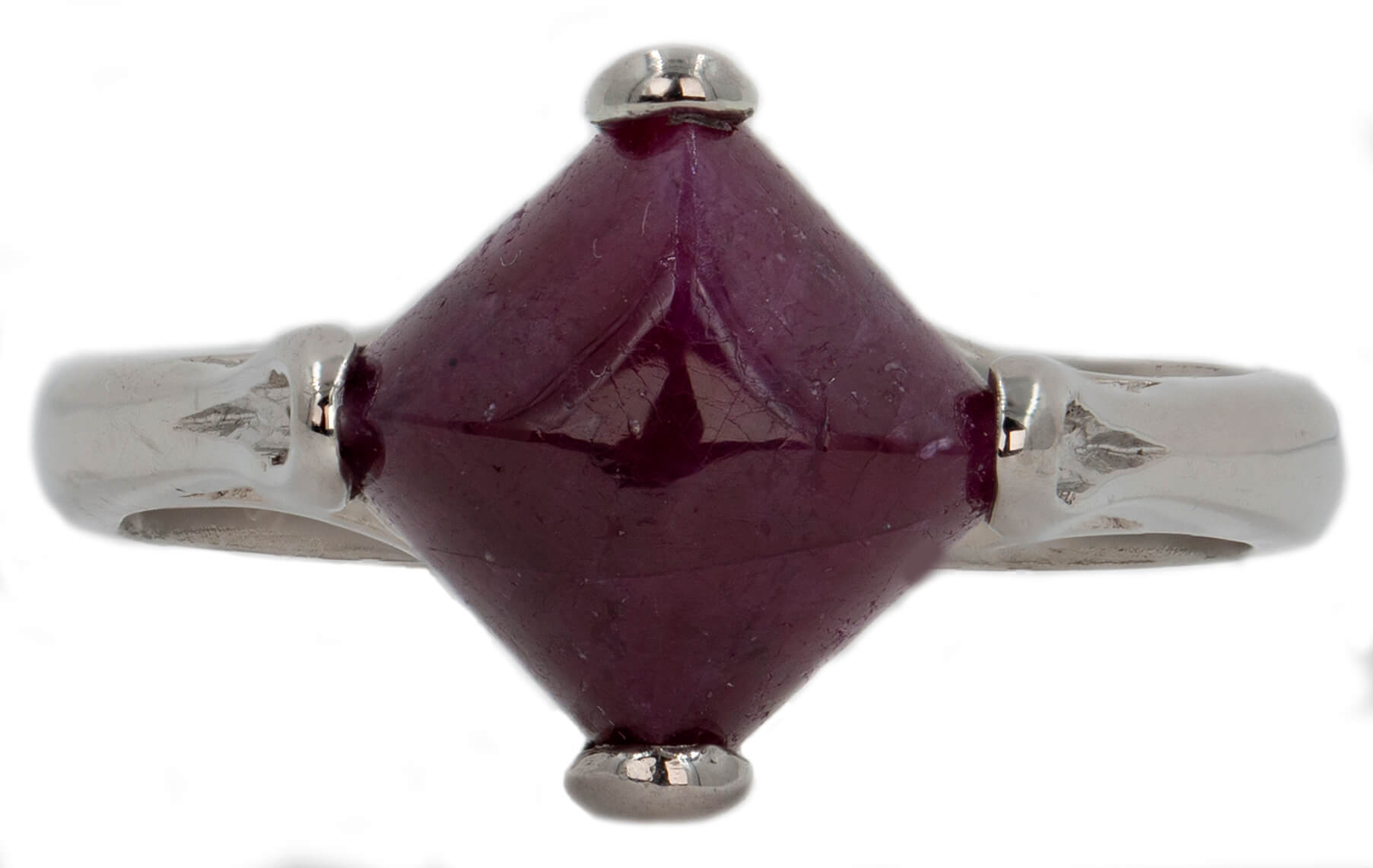
Sometimes a stone’s backstory is half its charm. Take the Palladium Sugarloaf Cabochon Ruby Ring: its ruby was cut from old, pre-war rough out of Afghanistan, then shaped to spec and set in recycled palladium by Stuart Berger. That’s a stone with genuine provenance, given a second life in a thoroughly modern design.
Has It Been Treated? Ask.
Most rubies you’ll encounter have been heated to coax out better color and calm down their inclusions. That’s normal, and it’s nothing to be squeamish about. But a stone that’s never seen the oven, a “no-heat” ruby, is a genuinely rarer creature, and collectors will pay handsomely for that untouched, natural color.
This is part of what makes older pieces so appealing: many estate rings hold untreated or barely-treated stones that are getting harder to find by the year. The rule of thumb is simple, any jeweler worth trusting will tell you exactly what you’re looking at, no coaxing required.
Cut: Made to Show Off the Red
Vintage rubies turn up in all sorts of shapes: cushions, ovals, rounds, baguettes, and the soft, domed cabochon that shows up again and again in older jewelry. The cutters of the past weren’t chasing maximum sparkle the way a diamond cutter would. They were chasing color.
That palladium ring is a perfect illustration: its modified sugarloaf cabochon is cut high and smooth, with no faceting to distract from the deep red pooling inside the stone. It’s all about the color, which is exactly the point with a fine ruby; brilliance plays backup while the red takes the lead. As a happy side effect, the way a stone is cut can also hint at its era and the hands that shaped it.
Don’t Overlook the Setting
In a ring, the mounting isn’t just a holder for the stone. This is where the maker shows off: hand engraving, a whisper of milgrain along an edge, prong work done with real patience. It’s worth slowing down and actually looking.
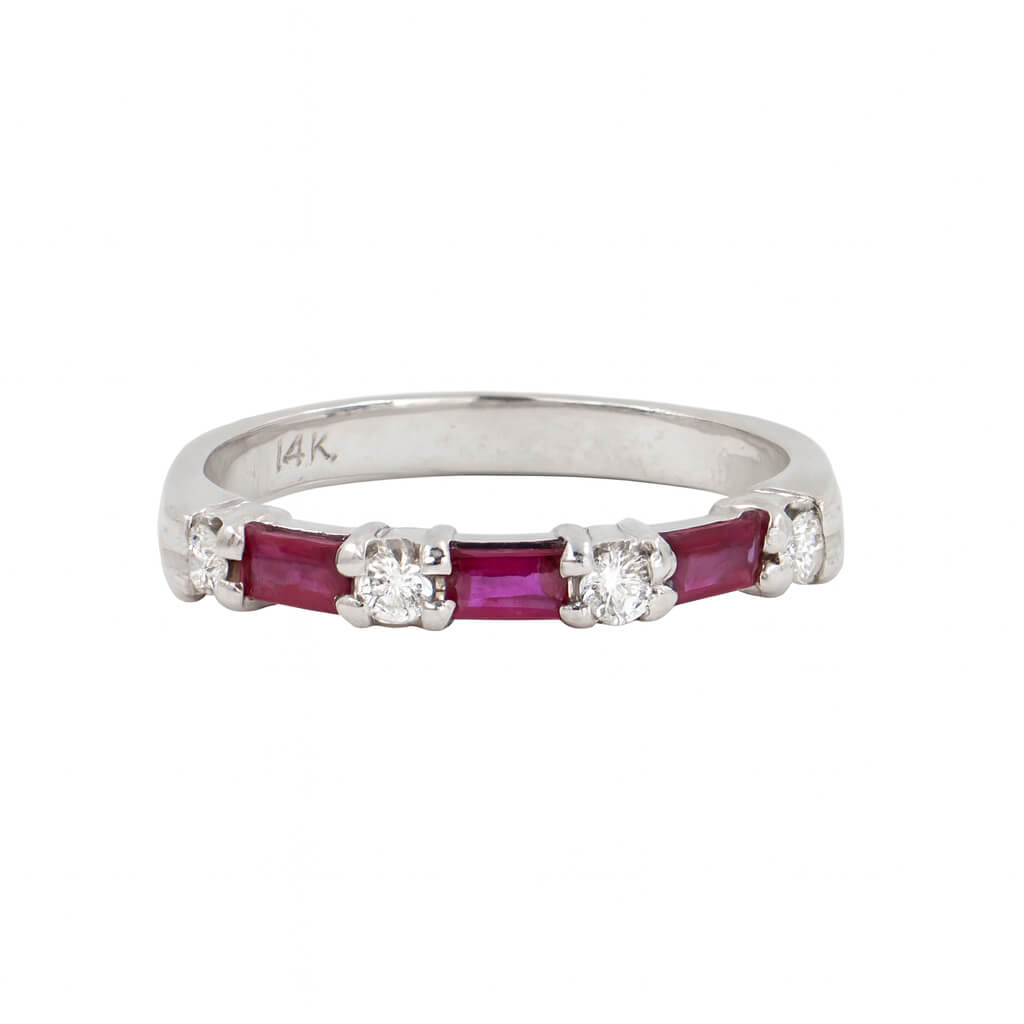
Metal matters to the mood, too. Yellow gold wraps a ruby in warmth and makes the red feel even deeper, while platinum, palladium, and white gold strike a crisper, more modern note, often with diamonds along for contrast. The Baguette Ruby and Round Diamond Band in 14 karat white gold is a great example of that pairing: channels of red baguette rubies alternating with bright round diamonds, the two playing off each other down the length of the band. Every estate ring in the collection is examined and written up by GIA-trained gemologists, so you’re not left guessing about how a given piece will hold up in real life.
The Same Stone, Reimagined Across the Eras
Half the fun of vintage hunting is seeing how wildly the same gemstone was interpreted from one generation to the next.
- Victorian: Sentimental, symbolic, and full of handwork. Rings from the Victorian era tend to feel personal, like they were made to mean something.
- Edwardian: Lacy, light, and impossibly delicate with fine platinum and cluster settings that framed rubies like little jewels within jewels. You can see the style across Edwardian pieces.
- Art Deco: Sharp angles, bold contrast, and rubies set shoulder to shoulder with diamonds. The Art Deco period gave us some of the most instantly recognizable ruby rings ever made.
- Retro and Mid-Century: Bigger, bolder, more sculptural, with rubies anchoring confident cocktail rings in warm gold. You can feel the swagger across Retro and mid-century designs.
Thinking Ruby for an Engagement Ring?
More couples are, and it’s easy to see why. A ruby center stone says something a diamond can’t and that Mohs-9 toughness means it can handle being worn every single day without complaint.
Go vintage and you get one more thing money can’t usually buy: a ring nobody else will be wearing. Browsing the engagement rings and wedding bands is the fastest way to see how different an old ruby design feels from anything new or contemporary.
A Few Words on Condition
Older rings have often lived a long life before they reach you, and that history can leave marks. Prongs wear thin, bezels soften, and a stone that’s been secure for decades can still need a little attention before it’s ready for daily wear. A piece with its original components intact and minimal repair work is always the better find.
This is exactly where an experienced eye earns its keep. Someone who can read a setting, judge a stone, and tell you honestly whether a ring is ready for everyday wear is protecting both your money and the piece itself.
The Real Reason These Rings Stick With You
You can walk into any mall and buy a brand-new ruby ring off a tray of identical ones, but a vintage ruby ring is the opposite of fast fashion. It’s singular; shaped by a particular hand, worn by someone whose name you may never know, and now, improbably, waiting for your chapter of the piece’s story.