Tues - Friday 10 - 5:30, Thurs 10 - 4, Sat 11 - 4
From Cleopatra to Modern Collectors: How Emerald Became the May Birthstone
Emerald has long been associated with renewal, love, and vitality—but how did this vivid green gemstone become the official birthstone for May? The answer stretches back thousands of years, from ancient Egyptian royalty to modern collectors who prize vintage emerald jewelry and rare estate pieces for their beauty and scarcity.
Today, emerald is not only a symbol of spring—it’s one of the most sought-after gemstones in antique emerald jewelry and emerald estate jewelry, valued for its rich color, fascinating inclusions, and storied past. For those exploring the category more deeply, Lippa’s curated selection of emerald gemstone jewelry highlights just how diverse and distinctive these pieces can be.

Why Is Emerald the Birthstone for May?
Emerald was officially designated as May’s birthstone in 1912, when the American National Retail Jewelers Association (now Jewelers of America) standardized the modern birthstone list.
However, its association with May—and with themes of growth and renewal—dates back much further. The lush green color of emerald naturally aligns with spring, a season defined by rebirth, fertility, and new beginnings. For centuries, cultures across the world connected emerald to these same ideas, making it a fitting symbol for those born in May.
This enduring symbolism is part of why emerald remains such a popular choice across many forms of estate jewelry, particularly for buyers seeking meaning as well as beauty.
Emerald in the Ancient World: Cleopatra, Rome, and Early Symbolism
Emerald’s story begins in antiquity, most famously with Cleopatra, who was known for her deep fascination with the gem. Egypt’s ancient emerald mines—often referred to as “Cleopatra’s Mines”—supplied stones that were worn by royalty as symbols of power and eternal youth.
In ancient Rome, emerald was associated with Venus, the goddess of love and beauty. Romans believed the gemstone could restore vision and soothe the eyes, while also representing harmony and fertility.
These early beliefs laid the foundation for emerald’s enduring symbolism—one that continues to influence both vintage emerald rings and modern jewelry design today, especially in unique pieces like gemstone rings that highlight the individuality of each stone.
The Evolution of Birthstones and Emerald’s Place in May
While gemstones have been tied to months and zodiac signs for centuries—dating back to biblical texts describing the Breastplate of Aaron—the modern birthstone system wasn’t formalized until the early 20th century.
By the time emerald was assigned to May, its reputation was already well established:
- A symbol of renewal and growth
- Associated with love and devotion
- Prized by royalty and collectors alike
This historical continuity is part of what makes emerald unique among gemstones—it has never fallen out of favor, and continues to appear prominently across both antique and modern interpretations of fine jewelry.
Emeralds in Antique Jewelry: Craftsmanship and Character
Emerald became especially prominent during the 18th and 19th centuries, appearing in finely crafted Georgian and Victorian pieces.
In antique emerald jewelry, stones were often set by hand in gold, with intricate detailing and symbolic motifs. Unlike modern gemstones, antique emeralds were rarely treated, and their natural inclusions—known as jardin—were embraced as part of their identity.
Collectors today value these characteristics highly, especially in:
- Handcrafted gold settings
- Old-cut emerald stones
- Unique, one-of-a-kind designs
You can see how these design elements come together in pieces from the Victorian jewelry era, where symbolism and craftsmanship were central to every creation. Many of these influences also carry into finely detailed pieces like antique necklaces and pendants, which often feature emeralds in sentimental or symbolic designs.
Vintage Emerald Jewelry: Art Deco to Mid-Century Design
As jewelry design evolved into the 20th century, emerald remained a centerpiece gemstone—particularly during the Art Deco and Mid-Century periods.
In the Art Deco era, emeralds were often paired with diamonds in bold, geometric designs, creating striking contrast and symmetry. These pieces remain some of the most iconic examples of vintage emerald jewelry, especially within the Art Deco jewelry period, where strong lines and vivid color combinations defined the era.
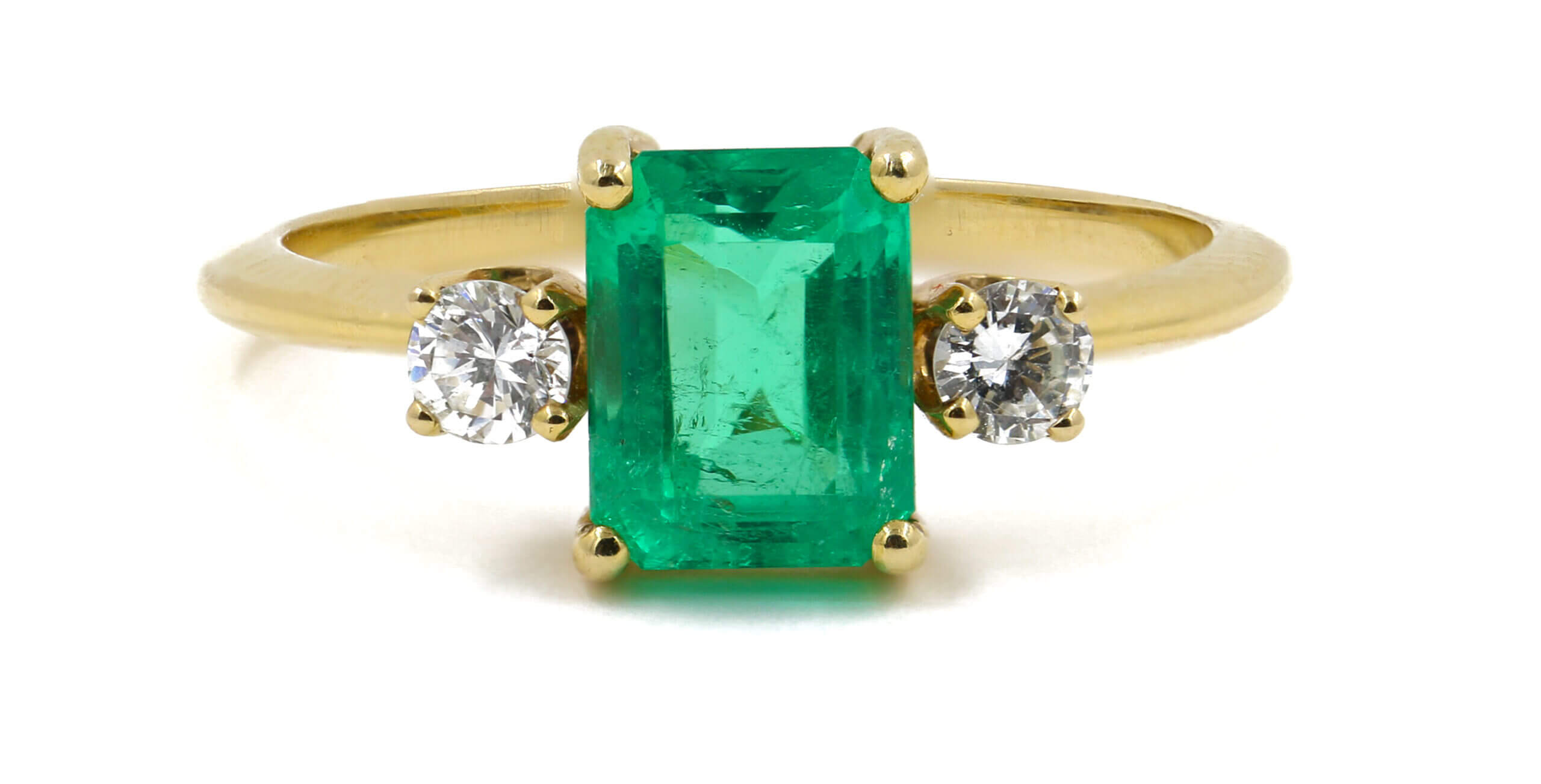
By the Mid-Century period, emerald designs became more sculptural and expressive, often set in platinum or gold with a focus on the gemstone itself. This evolution can also be seen across a wider range of estate jewelry rings, where emeralds appear in both bold statement pieces and refined everyday designs.
Across both eras, emerald played a key role in:
- Statement cocktail rings
- Elegant necklaces and pendants
- Unique engagement ring alternatives
For those considering a distinctive engagement option, emerald-centered designs offer a compelling alternative to traditional diamonds, particularly within curated collections of vintage engagement rings.
Why Collectors Seek Emerald Estate Jewelry Today
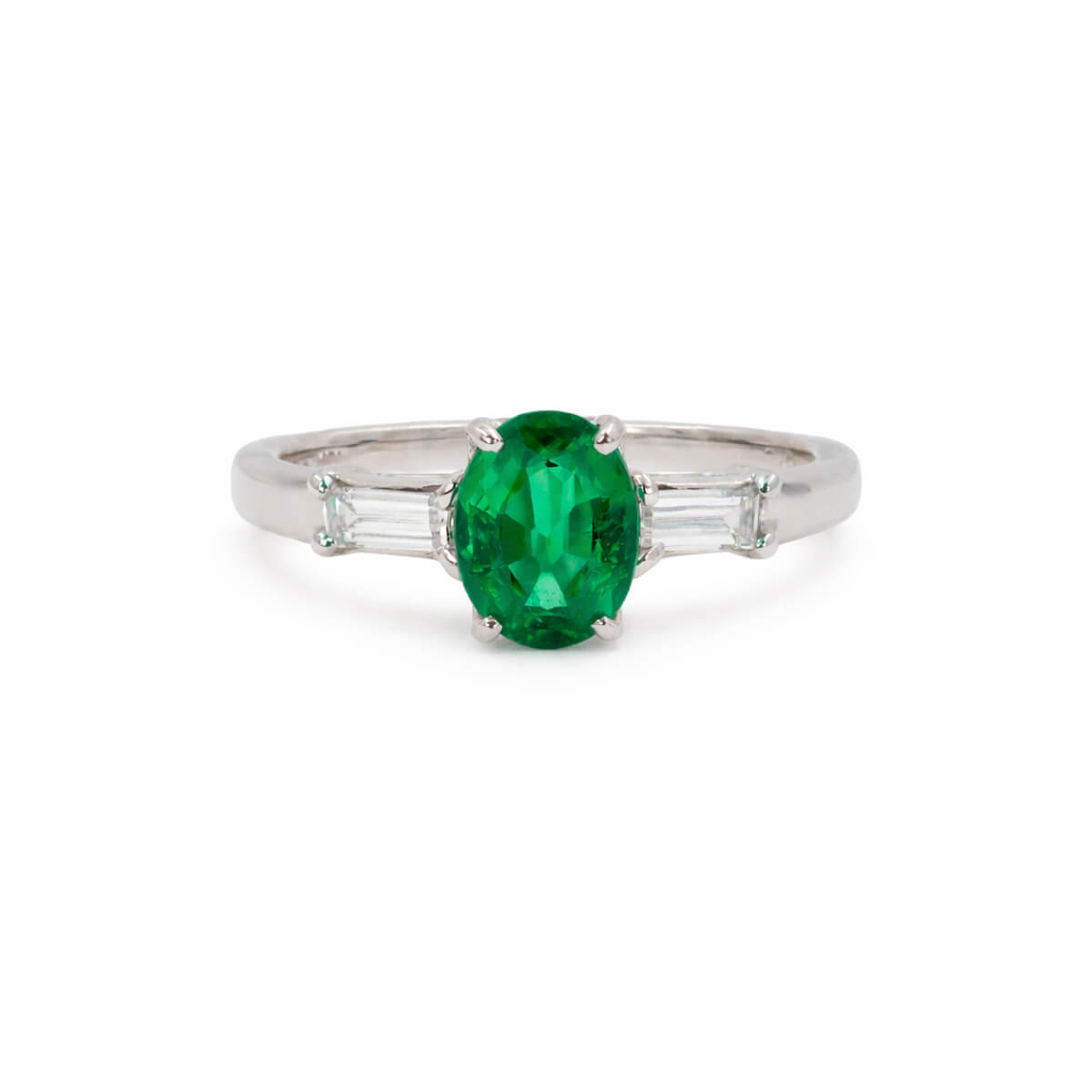
Unlike mass-produced modern jewelry, emerald estate jewelry offers something far more compelling: rarity.
Each piece is entirely unique—and once sold, it’s gone.
Collectors and buyers are especially drawn to:
- Colombian emeralds, known for their exceptional color
- Untreated or minimally treated stones
- Distinctive, era-specific craftsmanship
This combination of beauty and scarcity has made emerald one of the most desirable gemstones in the estate market, particularly within carefully curated collections of estate jewelry that emphasize quality and individuality.
What to Look for When Buying Vintage Emerald Jewelry
Emeralds are unlike diamonds in how they’re evaluated. Instead of prioritizing clarity, collectors focus on:
Color
The most important factor. Rich, vivid green stones command the highest value.
Clarity
Most emeralds contain inclusions—this is expected. The key is whether they impact durability or beauty.
Treatment
Many emeralds are treated with oils to enhance clarity. Untreated stones are significantly rarer and more valuable.
Setting
In antique and vintage pieces, the craftsmanship of the setting is just as important as the stone itself.
Reviewing a range of estate rings can help illustrate how these factors come together across different styles and periods, from delicate antique designs to bold vintage settings.
Discover One-of-a-Kind Emerald Jewelry
From Cleopatra’s legendary collection to today’s discerning collectors, emerald has remained one of the most captivating gemstones in the world.
For those born in May—or anyone drawn to its rich history and unmistakable color—vintage emerald jewelry offers something truly special: a connection to the past, and a piece that will never be replicated.Whether you’re exploring unique necklaces and pendants or searching for distinctive engagement rings, estate emerald pieces stand apart for their character, craftsmanship, and rarity.